
From Household Items to Rocket Catchers: Inside Ms. Smith’s Hands-On Engineering Class
By Kaia Hart
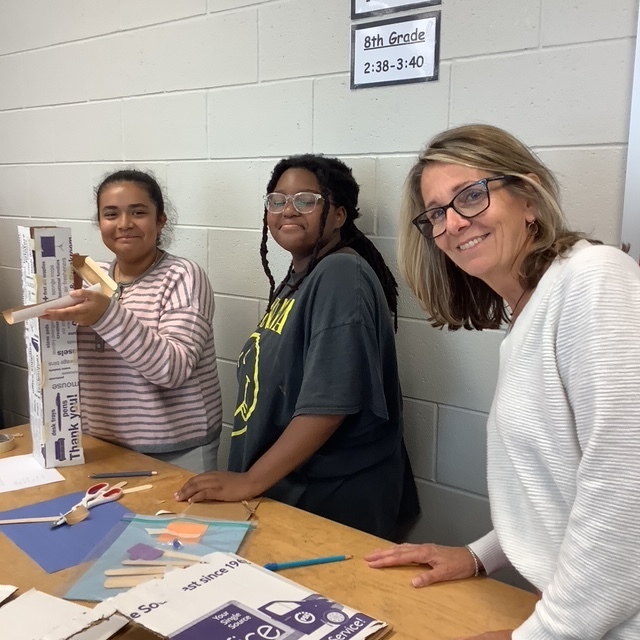
An SCM classroom is working hard using household items to solve real world problems! The teacher (Mrs. Smith) is working hard to make her students learn and solve problems while working on communication skills, hand to eye coordination & teamwork.
Ms. Smith emphasizes that these CTE classes are uniquely valuable because they are "good and different for us," offering practical skills not found in traditional subjects. As the rocket catchers face their final testing phase, she hopes her students will take what they have practiced here and "use the engineering design process to help solve real-world problems" long after the class ends.
Learning the physics and mechanics behind these structures is a challenge, but Ms. Smith ensures the foundational concepts stick. "This builds a foundational process on engineering," Ms. Smith said during an interview about the classroom's unique curriculum. Beyond the technical skills, the class has also brought students closer together. When asked about the most rewarding aspect of the program, Ms. Smith highlighted "the amount of friendships made in this class and how well they work together." Mrs. Smith is using her great teaching techniques to help kids use their new skills in & out of the classroom.
STEM Students Reach for the Sky with Rocket Catchers
By June Crosby
Students in STEM are putting their engineering skills to the test as they design and build rocket catchers. The project challenges students to create a device that can safely catch a rocket while using creativity, teamwork, and problem-solving. Inside the STEM classroom, students are working together to plan their designs and decide which materials will work best. Tables are filled with supplies, sketches, and students testing different ideas as they work to improve their rocket catchers. The project uses the engineering design process, which involves identifying a problem, creating a design, testing it, and making improvements. NASA also uses this process for engineering projects, where designs are tested and changed based on the results. According to the STEM teacher, Mrs. Smith,” I hope the kids use the Engineering design process to help solve more complex problems in the real world."Students are not expected to get their designs perfect on the first try. Instead, they have to look at what works, figure out what does not work, and make changes. As students continue building and testing their rocket catchers, the classroom becomes a place for experimenting and problem-solving. The goal is not just to build a catcher, but to understand why certain designs work better than others.